background image
Aqua Diary
  • Community Aquariums
  • Articles
  • Install
  • Log In
Aqua DiaryAqua Diary
  • Terms of Service
  • Privacy Policy
  • Cookies
  • Data Deletion
  • Help & Support
  • Website Map
Aqua Diary © 2026 All rights reserved.
White Pearl Shrimp
White Pearl Shrimp
Shrimp

White Pearl Shrimp

Neocaridina cf. zhangjiajiensis "White Pearl"

Taxonomy

Phylum:
Arthropoda
Subphylum:
Crustacea
Class:
Malacostraca
Order:
Decapoda
Suborder:
Pleocyemata
Family:
Atyidae
Genus:
Neocaridina

Tank

Nano tank:
Yes
Species tank:
No
Min. group:
10 pcs
Light:
Tolerates strong light
Special requirements:
Hiding places

Plants

Plants in the tank:
Yes
Behavior toward plants:
Nibbles when hungry

Food and tankmates

Food

Blanched lettuce
Nettle leaves
Beech leaves
Flake food
Frozen food
Cucumber
Carrots
Live food
Catfish tablets

Shrimp compatibility

Shrimp offspring
Dwarf shrimp
Amano shrimp

Breeding

Development type:
Direct (young look like adults)
Number of young:
20–40 juveniles
Clutch size:
20–40 eggs
Frequency:
With good water quality and the right water parameters, approximately every 4–6 weeks

Description

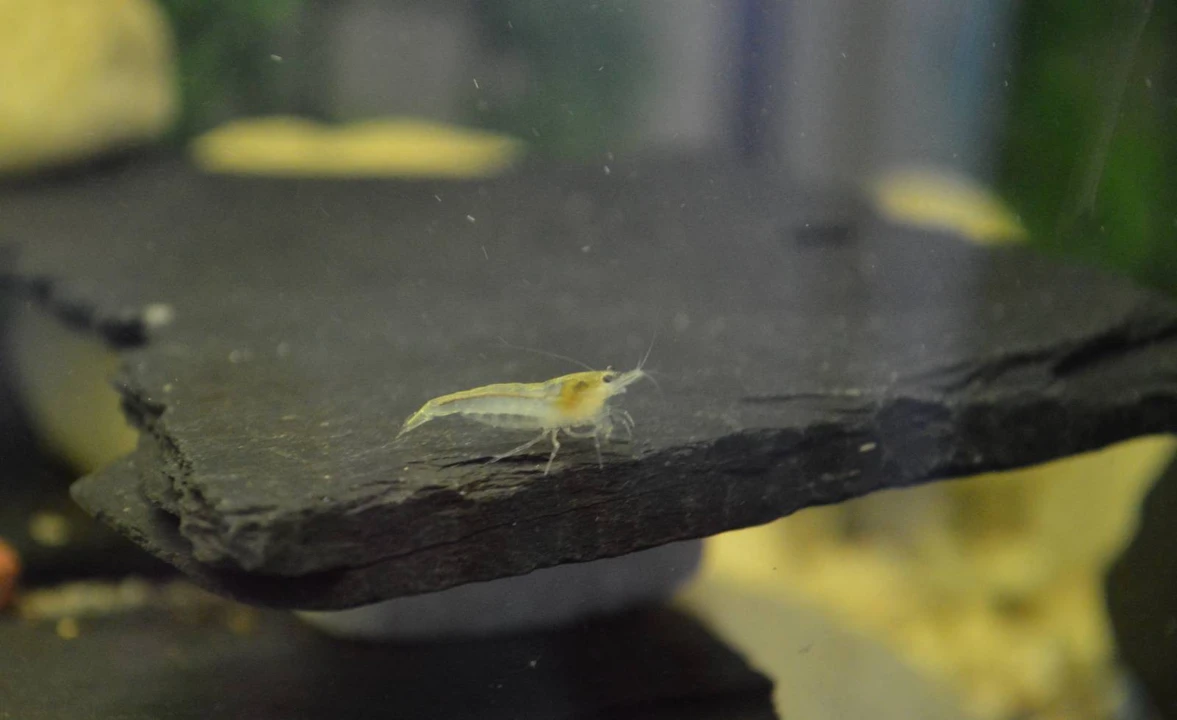
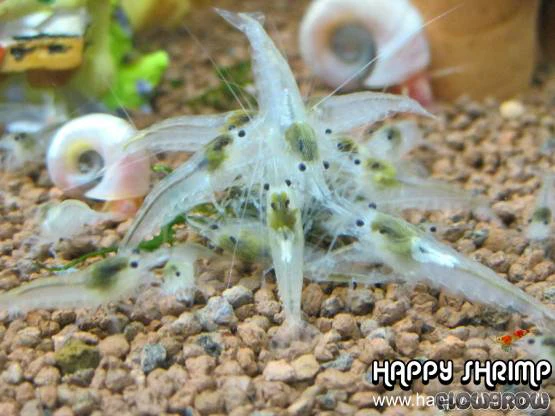
The White Pearl is a pretty, white-coloured shrimp suitable for beginners. However, advanced aquarists also often take a liking to it. Females of this species grow to approximately 3–3.5 cm in length, whereas males only reach approximately 3 cm. They also attain an age of approximately 2 years. For this species, the pH should be between 6 and 8, carbonate hardness between 0 and 10°, and general hardness between 1 and 15°.

Through selective breeding, a beautiful white colour can be developed.

How breeding happens

Breeding the White Pearl is quite easy with the right water parameters and good water quality and requires no further intervention by the keeper. As soon as the female reaches sexual maturity, she develops a saddle at the back of the head. The eggs form there and, at the next moult, are pressed into the abdominal brood pouch. The male attaches a sperm packet to the underside of the female, which attempts to press the eggs from the neck area into the abdominal brood pouch. After approximately 4 weeks, the female releases the approximately 1 mm-long juveniles, which immediately disappear into hiding places. There they graze all surfaces for microorganisms. During the first few days, they still moult relatively frequently, but this decreases with age. The animals acquire their colour as they grow older.