
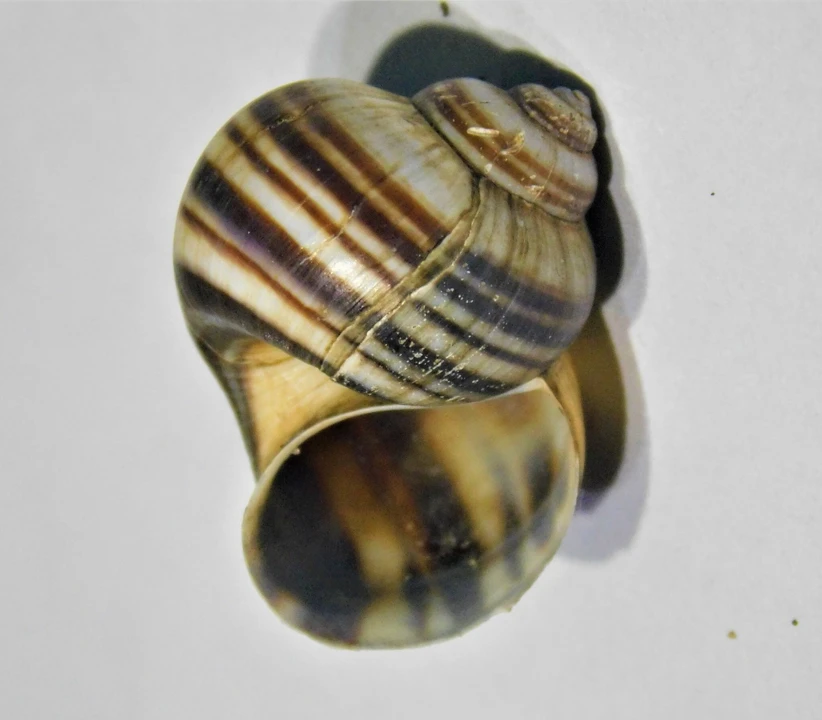
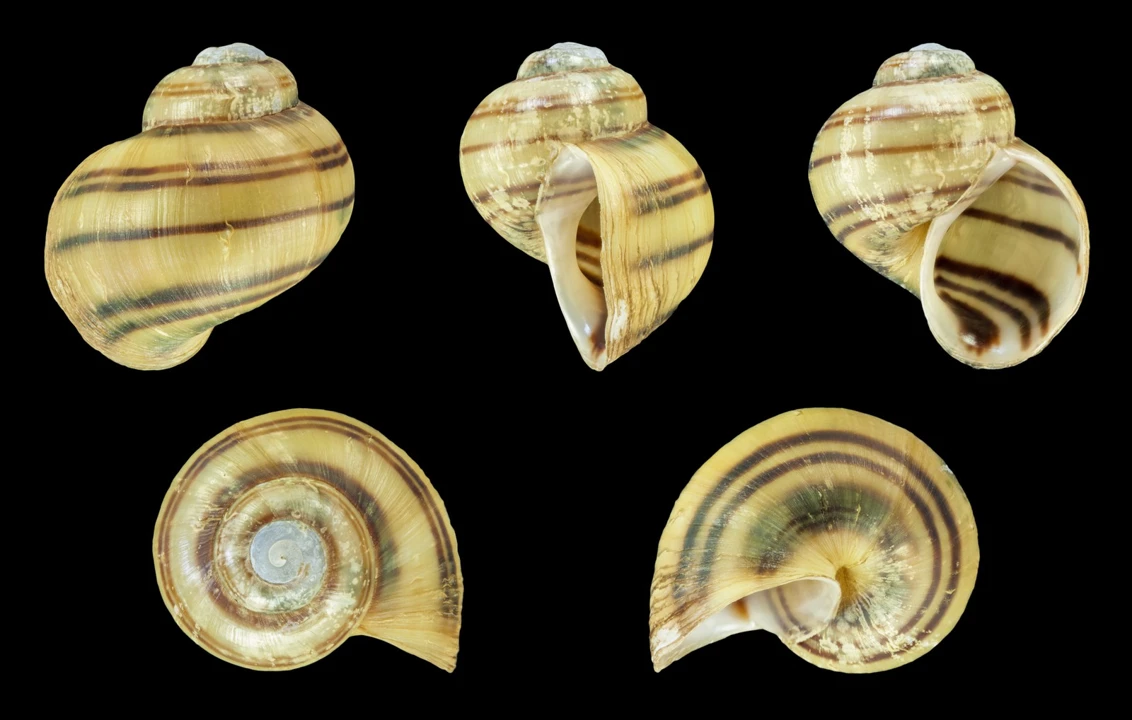
Description
The zebra apple snail, Asolene spixi, inhabits rivers in subtropical southeastern Brazil.
It differs markedly from the large apple snails of the genus Pomacea: among other things, it lays its egg clutches underwater rather than above the waterline, and the siphon, the organ with which it draws air into the mantle cavity, is not long and extendable like a trunk, but short and broad. When taking in air, the snail pushes part of its shell out of the water. Usually measuring about 2 cm, with a maximum of 4 cm, the shell is relatively small. It has a high-contrast striped pattern.
Its manner of locomotion is also striking: first it moves the foot forwards, then pulls the shell after it.
Unfortunately, this attractively patterned snail is only conditionally suitable for planted aquariums. Particularly when it is not given supplementary food or when stocking density is high (about 1 animal per litre of water), it becomes apparent that it eats plants, even stripping them bare. Only waterweed species (e.g. Egeria densa) are not damaged. However, when kept at a low density (about 1 animal per 10 l) or in sufficiently large tanks (from 60 l), the feeding damage is barely noticeable.
Asolene spixi competes with other snails for food and eats their egg clutches, and occasionally also live snails (e.g. ramshorn snails).