background image
Aqua Diary
  • Community Aquariums
  • Articles
  • Install
  • Log In
Aqua DiaryAqua Diary
  • Terms of Service
  • Privacy Policy
  • Cookies
  • Data Deletion
  • Help & Support
  • Website Map
Aqua Diary © 2026 All rights reserved.
Great ramshorn snail
Snail

Great ramshorn snail

Planorbarius corneus

Taxonomy

Phylum:
Mollusca
Subphylum:
Conchifera
Class:
Gastropoda
Order:
Pulmonata
Suborder:
Basommatophora
Family:
Planorbidae
Genus:
Planorbarius

About the species

Key features:
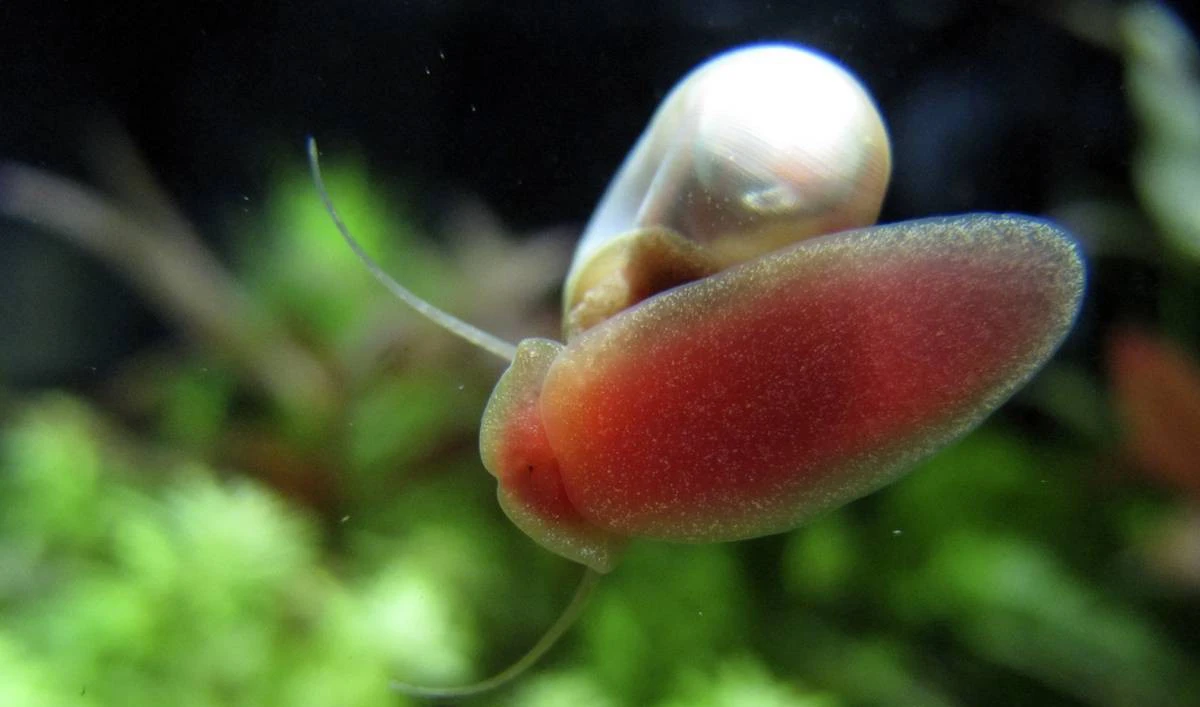
Shell and body dark brown (there are also rather red forms), planispiral shell, up to approximately 4 cm in diameter, shell aperture rounded and oblique; no operculum
Male:
3–4 cm
Female:
3–4 cm

Tank

Nano tank:
Yes
Species tank:
No
Light:
Tolerates strong light

Plants

Plants in the tank:
Yes

Food and tankmates

Food

Carrion
Blanched lettuce
Algae
Cauliflower
Nettle leaves
Beech leaves
Flake food
Frozen food
Cucumber
Carrots
Potatoes
Dandelion
Live food
Catfish tablets

Shrimp compatibility

Shrimp offspring
Dwarf shrimp
Amano shrimp

Safe medications

Fenbendazole (Panacur)

Description

The popular ramshorn snails kept in aquariums are often referred to as Planorbarius corneus. However, they are probably generally Planorbella (or Helisoma) species originating from the American continent.

The ramshorn snail native to Europe, Planorbarius corneus, probably only rarely finds its way into tropical aquariums. It is likely suitable for cold-water aquariums. This large aquatic pulmonate snail is dark brown and grows larger than Planorbella species; it has planispirally coiled shells measuring up to approximately 4 cm in width and 1.2 cm in height.

Planorbarius corneus is an extremely common aquatic snail in Central Europe. It can be found, for example, in pools, ponds, ditches and slow-flowing waters.

How breeding happens

Breeding requires no special intervention.

Although the snails are hermaphrodites, they mate if another individual is present in the tank. This considerably increases the hatching rate.