
Description
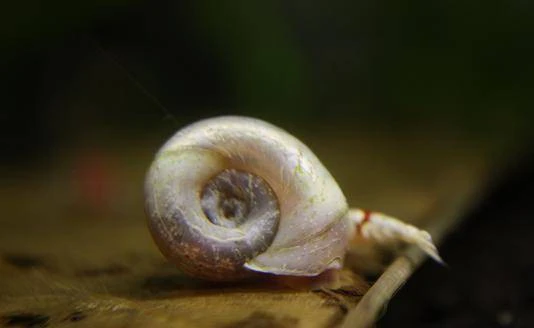
Many different types and colour forms of ramshorn snails, known for short as “PHS”, are kept in aquariums. They are among the most popular and undemanding aquarium snails. They are often introduced unintentionally with plants or decorative items.
Ramshorn snails in aquariums are often thought to be Planorbarius corneus, a species native to Europe; however, in most cases they probably belong to the genus Planorbella (or Helisoma).
The Planorbella species originating from North to South America are difficult to identify, but many of the colourful forms are said to belong to Planorbella duryi (= Helisoma duryi). They occur in many shell colours—brown, red, pink, blue, orange, etc.; there is something for every taste. In aquarium literature, tropical ramshorn snails are often referred to as Helisoma nigricans.
It certainly cannot be ruled out that the native ramshorn snail Planorbarius corneus also finds its way into tropical aquariums; in the wild, this large, dark-brown species develops shells up to about 4 cm in diameter. Planorbella species generally remain smaller (up to approximately 2.5 cm in diameter).
When keeping them, it is essential to ensure sufficient water hardness. If the water is too soft and acidic, shell damage occurs, and fewer young snails survive (which can, of course, also be used to one’s advantage if no ramshorn snails are wanted in the aquarium).